


By Anna White
Fishers Island Conservancy
Yesterday, August 11, 2026, a Spotted Lanternfly (Lycorma delicatula) was found on island. Evan, one of the assistant pros at the Big Club, noticed the insect flying around 6:00 PM, watched it land on the tire of a golf cart, photographed it, and killed it right away. This is likely one of the first confirmed sightings of this species on the island, and it’s an important one to pay attention to.
Thank you, Evan, for identifying it and getting rid of it right away!

The invasive Spotted Lanternfly (Lycorma delicatula) has been spreading throughout the Northeast, including southeastern Connecticut. By September 2025, established populations had been documented in New London County, making its eventual arrival on Fishers Island an important possibility to prepare for. Spotted Lanternflies can also hitchhike on vehicles, boats, equipment, and other materials, allowing them to spread into new areas. (Learn more here)
Beyond being a general nuisance, Spotted Lanternfly is a serious pest of grapes and hops, and can also damage a wide range of other plants. The more established it becomes, the harder and more costly it is to manage.
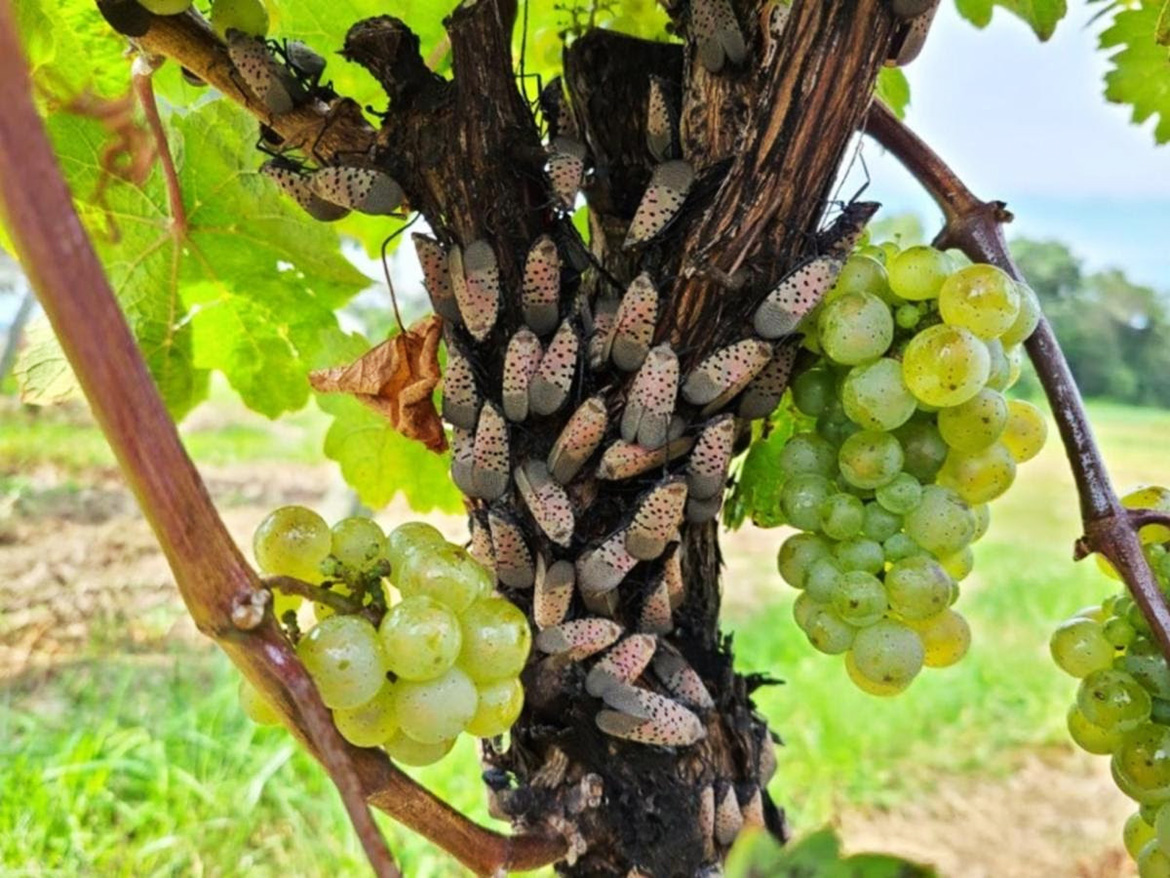
What to look for
Spotted Lanternflies lay egg masses that can be just as important to spot as the insect itself. Egg masses are often found on tree bark, stone, or outdoor equipment and can be easy to overlook if you don’t know what they look like.

Why Tree-of-Heaven matters
One of the most important plants associated with Spotted Lanternfly is another invasive species already found on Fishers Island: Tree-of-Heaven (Ailanthus altissima). Lanternflies can feed on many different plants, but Tree-of-Heaven is a preferred host, and feeding on it actually makes the insect more toxic, since it absorbs compounds from the plant into its own tissue. That toxicity helps protect the lanternfly from predators. Where Tree-of-Heaven isn’t present, the insect is less protected and more vulnerable to natural predation. That means removing Tree-of-Heaven from your property isn’t just good invasive plant management on its own, it can directly weaken the lanternfly’s foothold here.
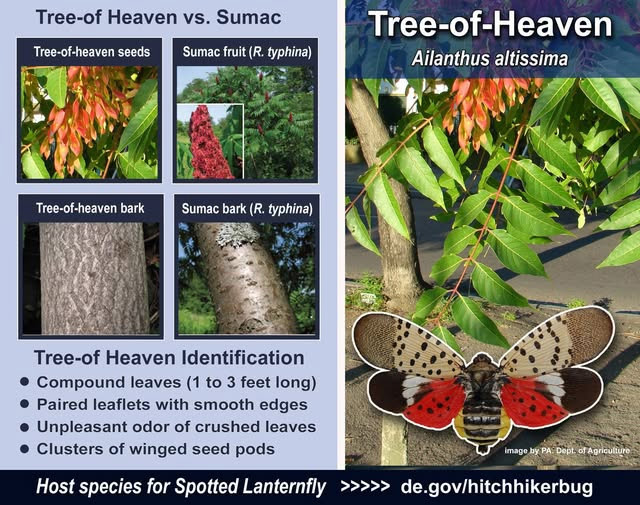
Look for very large compound leaves made up of many individual leaflets, often giving the tree a tropical or almost palm-like appearance. The leaflets have smooth edges with one or more small teeth or glandular bumps near their base. When the leaves or young stems are crushed, they often produce a strong, unpleasant odor, sometimes compared to burnt or rancid peanut butter.
Tree-of-Heaven is commonly confused with native sumacs, and getting the identification right matters, since sumacs support species like the hickory horned devil caterpillar that we want to protect. Please take care to correctly identify a plant before removing it.
The FI Conservancy and Fishers Island Research and Survey Team (FIRST) will continue monitoring for this unwelcome guest and the invasive plants that may help support it. It’s time to take action so we don’t see more of them spread across the island.
Have you seen one? Please report any sightings of Spotted Lanternflies, egg masses, or Tree-of-Heaven so we can track how widespread this is. Contact Tyler at tyler.mcmahon@go.tarleton.edu to report a sighting or ask questions. Please also report directly to New York State using the NY Dept. of Agriculture & Markets reporting form.

